
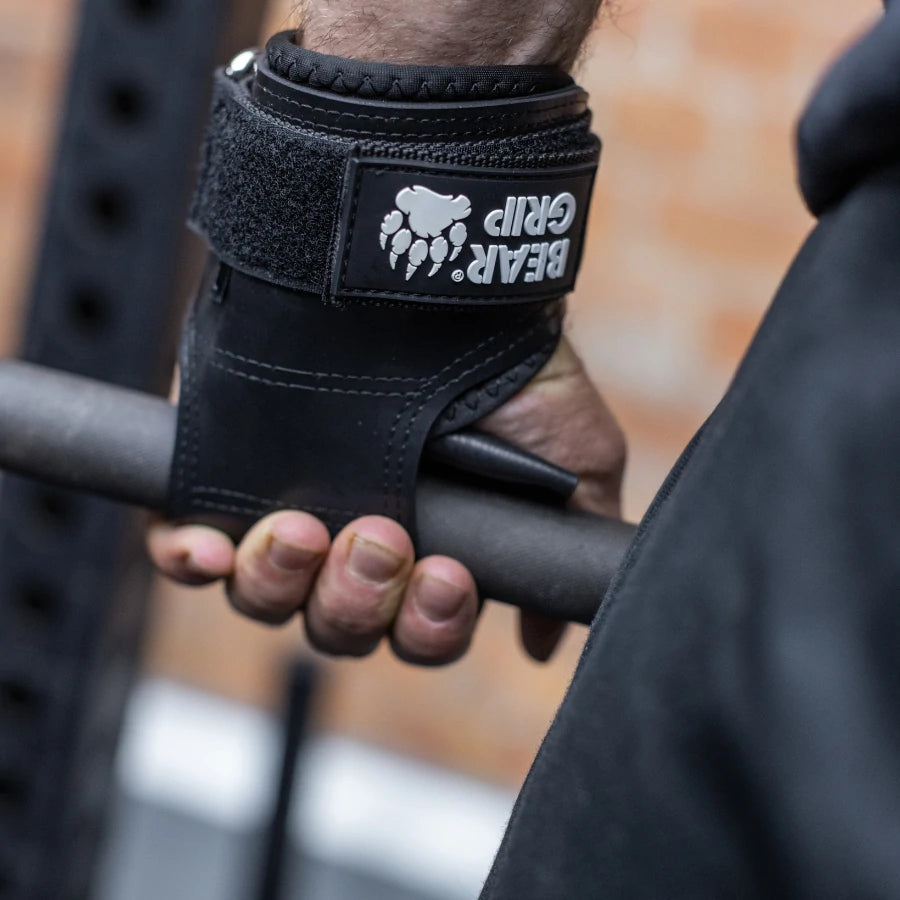
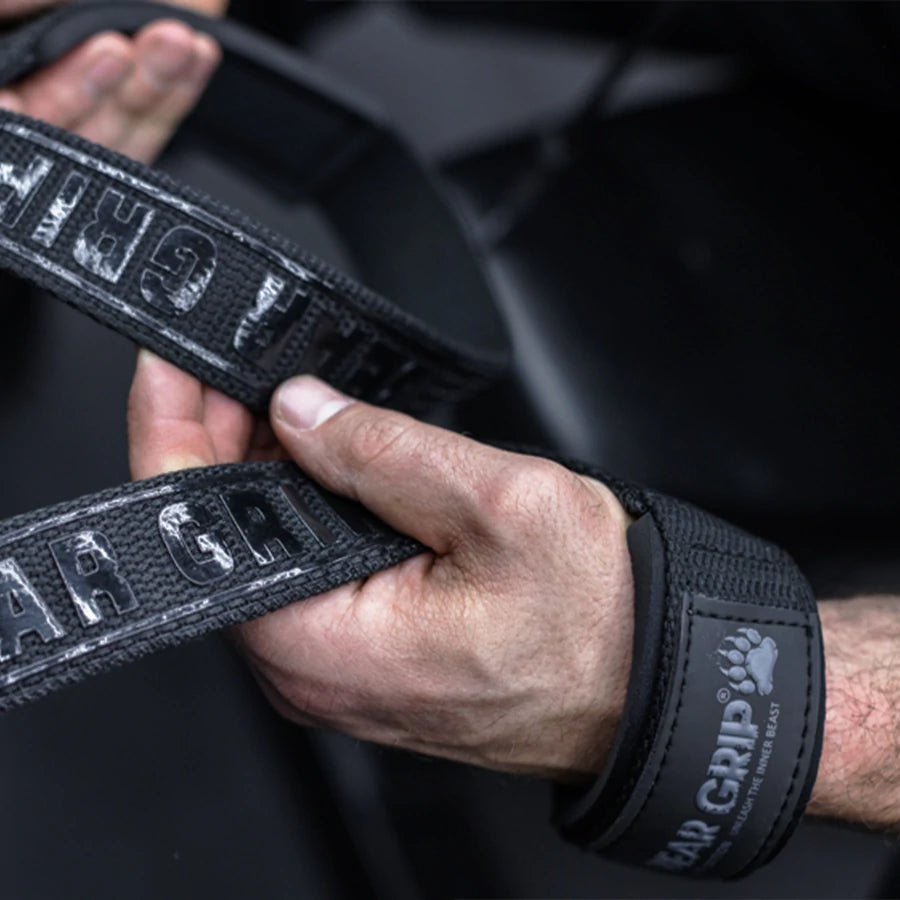
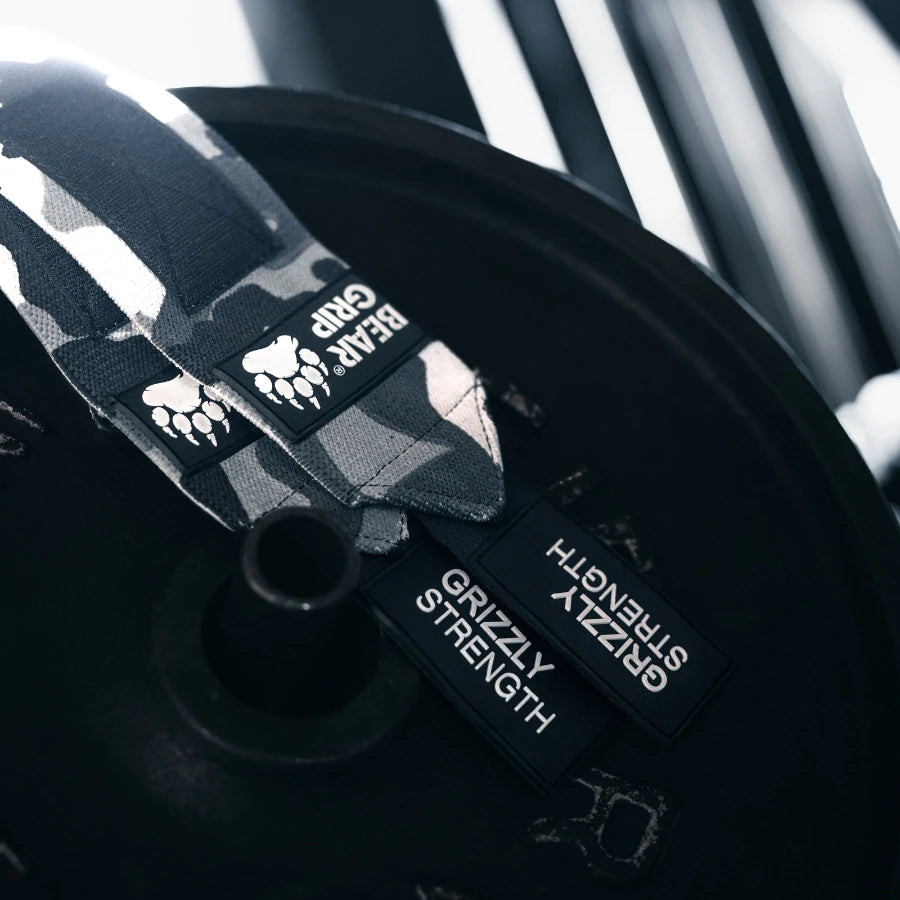
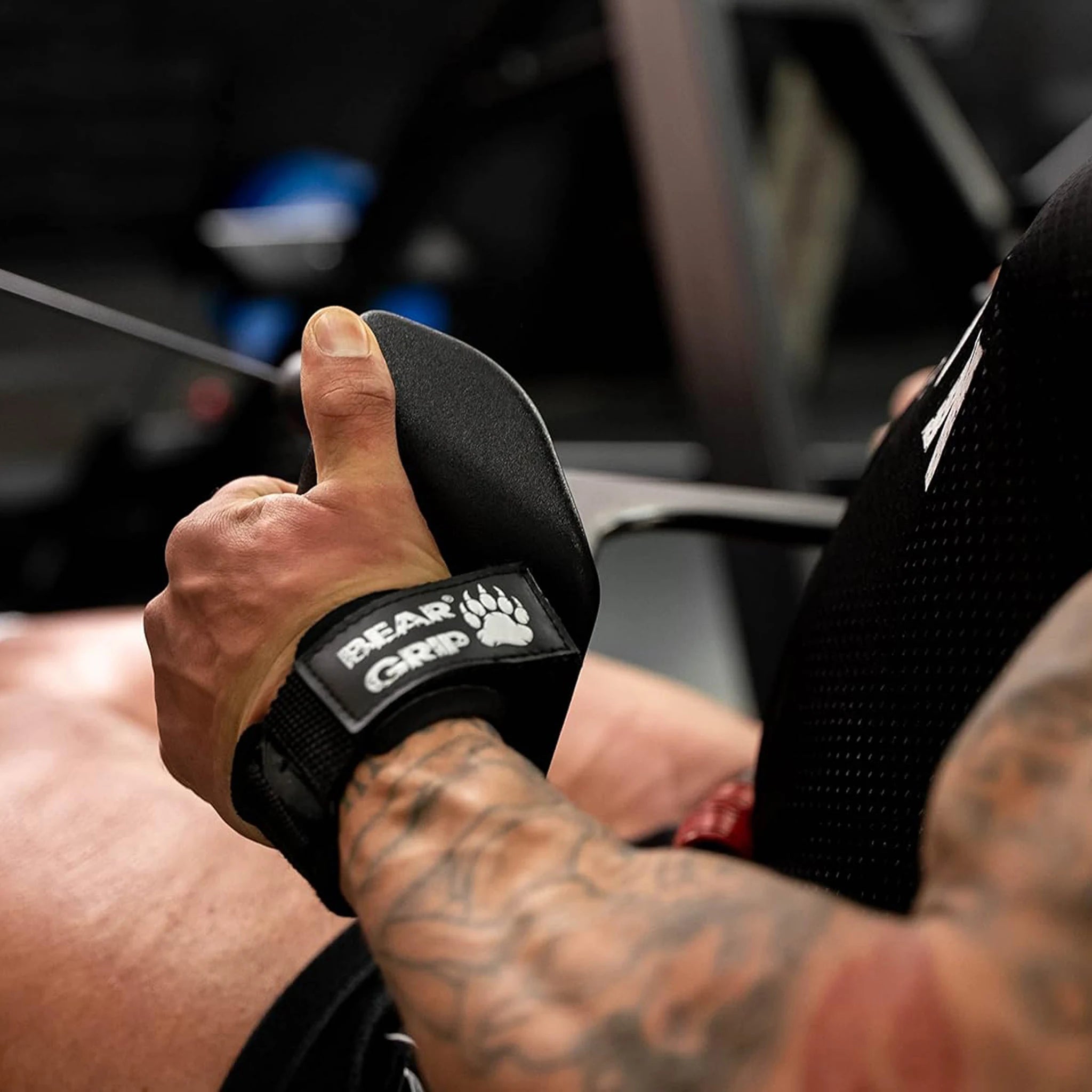
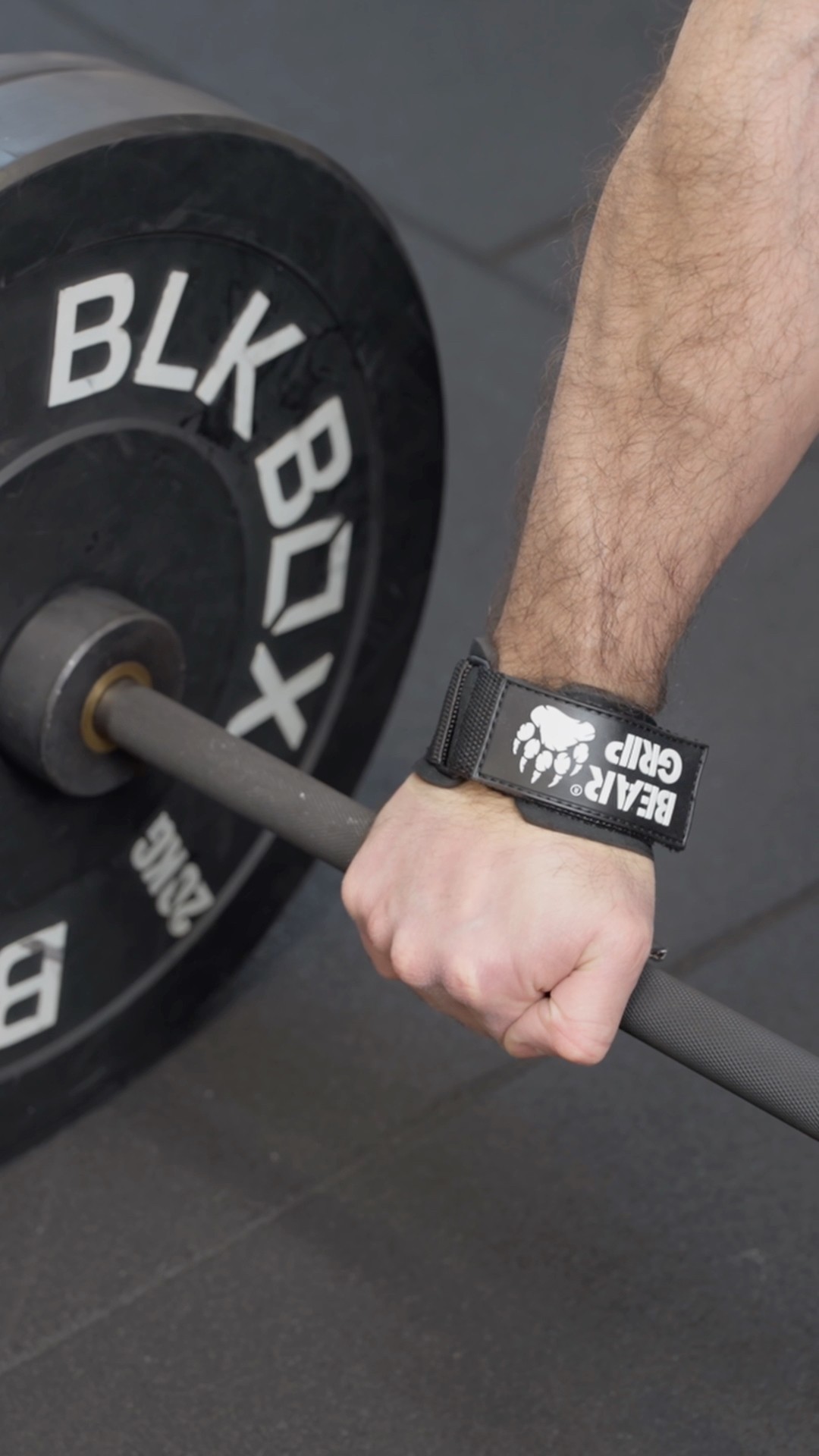
A multi grip strap does one job: it keeps the bar in your hand once your grip has run out of road. On a heavy pulling set the hands usually give up before the back does, and the set ends early — not because the target muscle is finished, but because the bar is rolling out of your fingers. The strap closes that gap.
What makes this strap multi grip is that the same piece of webbing runs three different ways. Most people learn one and never try the others, which is a shame, because each one suits a different lift.
The three set-ups
1. The lasso
Thread the tail through the loop, drop your wrist into the collar it makes, then wrap the tail around the bar — away from you, over the top — and close your hand over the wrap. Two turns is plenty. Pull the slack out before you lift; a loose lasso tightens under load and shifts your hand position mid-rep.
Use it for: deadlifts, rack pulls, heavy rows, shrugs. Anything where the bar hangs and the hand does not need to let go quickly.
2. The single pass
No lasso. Lay the strap flat across the bar, hand on top, and let the friction between webbing, bar and palm do the work. It takes a second to set and a second to bail out of.
Use it for: lat pulldowns, cable rows, high-rep pulling where you want the option of dropping the handle between reps.
3. The closed loop
Tail through the loop, cinched down to make a fixed collar around the bar or handle. The tightest of the three and the slowest to release.
Use it for: low-rep top sets and holds. Not for anything overhead, and not for a lift you might need to abandon quickly.
If you cannot get out of the strap fast, it does not belong on that lift.
Getting the tension right
The strap should sit snug against the wrist with no daylight between webbing and bar. Two checks before the first rep:
- Roll the bar backwards a few degrees. The wrap should tighten, not slide. If it slides, you have wrapped the wrong way round.
- Open your hand a fraction. The bar should stay put. If it drops away, take one more turn.
Both hands get the same number of turns. Uneven wraps put the bar in your hands at slightly different heights, and you will feel it as a tilt halfway up the pull.
Where people go wrong
- Wrapping towards yourself. The wrap has to run the same direction the bar wants to roll. Backwards, and every rep loosens it.
- Too many turns. Three or more turns of bulk between hand and bar pushes the fingers open and makes the grip feel worse, not better.
- Strapping everything. If straps go on from the first warm-up set, grip never gets any work. Use them on the sets that need them.
- Overhead work. Being fixed to a bar above your head is not a position you want. Keep straps for pulling.
Straps and chalk
They solve different problems and stack well. Chalk manages moisture, so the bar stops slipping in a sweaty hand. A strap manages load, so the hand stops being the limit. On a big pulling day, chalk the hands first and let it dry, then set the straps over the top.
The short version
- Lasso for deadlifts and rows; single pass for cables and high reps; closed loop for low-rep holds only.
- Wrap away from you, over the top of the bar. Two turns.
- Pull the slack out before the first rep, and match both hands.
- Nothing overhead, and nothing you might need to bail out of fast.
- Chalk first, straps second.